Current Issues

These are articles on current issues surfacing through the news or popular culture that are relevant to the lives of some Africana peoples.  Even though these issues arise in popular culture, Afrometrics works to place such events in greater historical and cultural context than one would find in the mainstream media.  Our current issues articles also take on a prescriptive or solution oriented approach.
  • Welcome
  • About
  • The Team
    • Africologists' Publications
  • Empirical Research
    • The Black Unity Center at San Francisco State: A Case Study of the Impact of a Black Student Center
    • African Americans Weigh In on Solutions to Police Brutality
    • The Relationship between Culture, Learning Styles, and Academic Achievement: A Case Study of Young Black Men
    • Gender, Achievement, and Learning Styles
    • Effects of the Trayvon Martin-George Zimmerman Case on American Thought
    • Black People Say What it Means to be Black
  • Research Based News
    • Research Based News Episodes
  • Current Issues
  • Africana Religious Studies Series
  • DEC.IMA
  • Africological Research
  • Join
  • Afrimation Podcast
  • Welcome
  • About
  • The Team
    • Africologists' Publications
  • Empirical Research
    • The Black Unity Center at San Francisco State: A Case Study of the Impact of a Black Student Center
    • African Americans Weigh In on Solutions to Police Brutality
    • The Relationship between Culture, Learning Styles, and Academic Achievement: A Case Study of Young Black Men
    • Gender, Achievement, and Learning Styles
    • Effects of the Trayvon Martin-George Zimmerman Case on American Thought
    • Black People Say What it Means to be Black
  • Research Based News
    • Research Based News Episodes
  • Current Issues
  • Africana Religious Studies Series
  • DEC.IMA
  • Africological Research
  • Join
  • Afrimation Podcast

"Buy In": Economic Sanctions and Solidarity, Dr. King's Last Words

11/1/2015

0 Comments

 
Written by Serie McDougal
“We've got to strengthen black institutions. I call upon you to take your money out of the banks downtown and deposit your money in Tri-State Bank. We want a "bank-in" movement in Memphis. Go by the savings and loan association. I'm not asking you something that we don't do ourselves at SCLC. Judge Hooks and others will tell you that we have an account here in the savings and loan association from the Southern Christian Leadership Conference. We are telling you to follow what we are doing. Put your money there. You have six or seven black insurance companies here in the city of Memphis. Take out your insurance there. We want to have an "insurance-in.”

​- Been to the Mountain Top, Martin Luther King, Jr
Picture
Photo source: www.jacobsriteofpassage.com
On April 3, 1968, Martin Luther King, Jr. gave his final speech.  One of the last messages he delivered that night was on the dual benefit of Black economic solidarity. He said, “Now these are some practical things that we can do. We begin the process of building a greater economic base.

And at the same time, we are putting pressure where it really hurts”.  Dr. King implored the Black community to spend our money with Black institutions to create a strong base that would allow us to meet many of our own needs.  Moreover, King believed that this cooperation would also place economic sanctions on racist institutions for unmet demands for justice and their on-going racial discrimination.  Some prefer to remember King’s call for reconciliation more than his demands for justice.  However, this dying message from our dear ancestor couldn’t be more relevant than it is today. 

STRIKING RACIST INSTITUTIONS
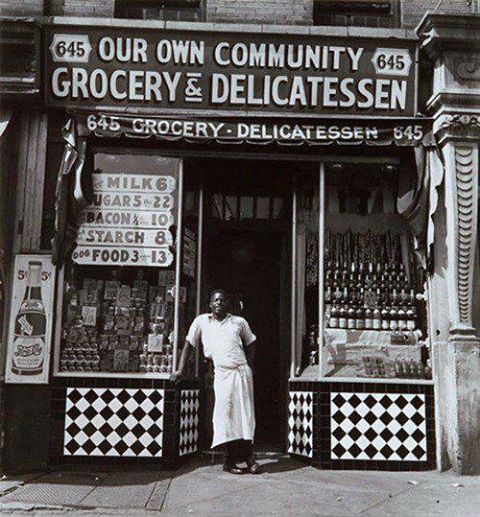
Black-owned businesses are essential to Black community empowerment because evidence shows that they generate wealth, and create investment opportunities and employment prospects for Black people (Conrad, Whitehead, Mason, & Stewart, 2005).  In addition, U.S. consumer spending in the months of November, December, and January are crucial to many of the largest companies in the United States.  Racist large corporations such as Wal-Mart Stores, Abercrombie & Fitch and General Electric, Wells Fargo and many others have also made people of African descent in the U.S. victims of hiring discrimination, lending discrimination, wage discrimination, and other offenses while continuing to benefit from the Black community’s $1 Trillion buying power.  Given the significance of U.S. consumer spending, this makes the next three months, the perfect time to, in the words of Martin Luther King, “redistribute the pain” that the Black community has felt as a consequence of racial injustice.   

MAGGIE'S LIST: MOVING BEYOND THE FORCED-INTO-UNITY THESIS
The forced-into-unity thesis is the belief that Black community empowerment can only come as a result of segregation and oppression.  While it is true that many Black businesses grew and developed during the time of de jure segregation, many survived and thrived thereafter, despite the increased competition for Black consumer dollars that Black businesses faced when segregation ended.  Today, Black businesses continue to suffer from being undercapitalized, conservative tax policies, and a lack of diversity and managerial training.  An economic solidarity charge must be tempered by the warning that pure Black capitalism could simply exacerbate class divisions within the Black community if it is not grounded in the philosophy of collective Black liberation. However, the Black community can change this and more by using its trillion dollar buying power attached to the political agenda of Black collective advancement.  But how?  Quite timely, sister Maggie Anderson is launching her national list of Black businesses, and a smartphone app starting on November 1st, 2015.  There are a great number of lists of Black owned businesses available electronically and at local Black chambers of commerce; however, Anderson’s is among the newest.  Anderson is the author of the critically acclaimed book, “Our Black Year,” about how her family spent a whole year buying all goods and services from Black businesses.  Since her family’s experiment, Anderson has dedicated her life to Black economic solidarity.  Spending is not just about money because spending power is related and leads to political power.  But power will only come when Black spending power is linked to Black political priorities.  

Works Cited
Conrad, C.A., Whitehead, J., Mason, P. & Stewart, J. (2005). African Americans in the U.S. economy.    Lanham, MD: Rowman & Littlefield.
0 Comments


Leave a Reply.

    Archives

    April 2022
    June 2019
    November 2018
    January 2018
    December 2017
    November 2017
    October 2017
    September 2017
    July 2017
    June 2017
    February 2017
    October 2016
    June 2016
    May 2016
    February 2016
    January 2016
    November 2015
    October 2015
    August 2015
    May 2015
    April 2015
    February 2015
    December 2014
    November 2014
    October 2014
    September 2014
    July 2014
    November 2013
    August 2013

    Categories

    All
    Africana Studies
    Black Cultural Centers
    Black Males
    Black People
    Budget Cuts
    College Of Ethnic Studies
    Culturally Relevant Education
    Gun Violence
    Police Brutality
    President Obama
    San Francisco State University

    RSS Feed

© 2013 Afrometrics. All rights reserved. 1600 Holloway Avenue, Ethnic Studies + Psychology Building, Department of Africana Studies, San Francisco, California. 
Afrometrics
  • Welcome
  • About
  • The Team
    • Africologists' Publications
  • Empirical Research
    • The Black Unity Center at San Francisco State: A Case Study of the Impact of a Black Student Center
    • African Americans Weigh In on Solutions to Police Brutality
    • The Relationship between Culture, Learning Styles, and Academic Achievement: A Case Study of Young Black Men
    • Gender, Achievement, and Learning Styles
    • Effects of the Trayvon Martin-George Zimmerman Case on American Thought
    • Black People Say What it Means to be Black
  • Research Based News
    • Research Based News Episodes
  • Current Issues
  • Africana Religious Studies Series
  • DEC.IMA
  • Africological Research
  • Join
  • Afrimation Podcast
  • Welcome
  • About
  • The Team
    • Africologists' Publications
  • Empirical Research
    • The Black Unity Center at San Francisco State: A Case Study of the Impact of a Black Student Center
    • African Americans Weigh In on Solutions to Police Brutality
    • The Relationship between Culture, Learning Styles, and Academic Achievement: A Case Study of Young Black Men
    • Gender, Achievement, and Learning Styles
    • Effects of the Trayvon Martin-George Zimmerman Case on American Thought
    • Black People Say What it Means to be Black
  • Research Based News
    • Research Based News Episodes
  • Current Issues
  • Africana Religious Studies Series
  • DEC.IMA
  • Africological Research
  • Join
  • Afrimation Podcast
Founded in January 2013. An Independent Research Institute for Africana People.